
 Facebook
 X
 Pinterest
 Copy Link
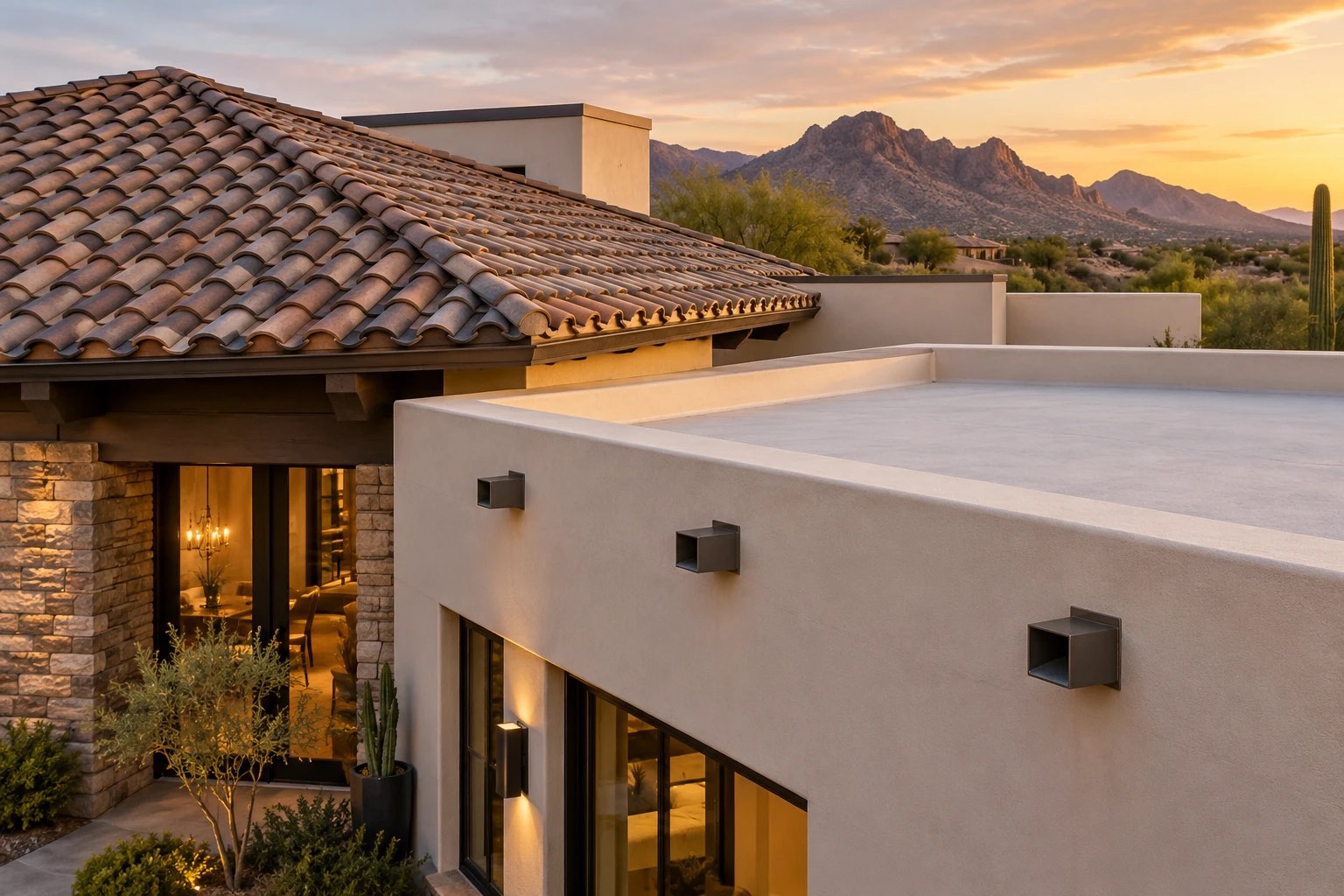
If you’re buying a home in Arizona for the first time, there’s a good chance the roof will look different from the one you’re used to.
Instead of shingles, you’ll see tile, flat roofs hidden behind short walls, or very often both on the same home.
And the questions start right away. How long does a tile roof last? What about a flat roof? What kind of maintenance does each one need?
They’re some of the most common questions buyers ask me, so here’s how I explain it.
I’m Monica Condomitti, a Luxury Real Estate Advisor with MC Luxury Real Estate at Coldwell Banker, serving Rio Verde and North Scottsdale, Arizona.
How Long Does a Tile Roof Last?
This is usually the first question, and the answer has two parts.
The tiles themselves are very durable. InterNACHI, the International Association of Certified Home Inspectors, lists clay and concrete roof tile at 100 years or more in its estimated life expectancy chart.
But the tiles aren’t really what keeps the water out. They protect what’s underneath. The layer below the tiles, called the underlayment, does most of the waterproofing. And that’s the part that wears out.
Underlayment commonly lasts somewhere around 15 to 30 years, depending on the material and how much heat and sun it takes. InterNACHI’s chart lists traditional felt paper at 15 to 30 years, and our Arizona heat can push toward the shorter end.
That’s why a tile roof can look perfectly fine from the street and still need attention underneath. When a tile roof needs major work, it’s often the underlayment being replaced, with the tiles lifted off and set back in place.
How Long Does a Flat Roof’s Coating Last?
Flat roofs work differently. Many are protected by a coating on top, and that coating is what shields the roof from the sun and helps keep water out.
Here, many flat-roof coatings need recoating about every five years, and some sooner, depending on the coating and how it’s been cared for.
The calendar is only part of the story, though. The roof’s condition matters more. Chalky or worn coating, cracks, blisters, or water that sits in low spots after a storm are all signs it may be time for attention.
Drainage matters too. Flat roofs rely on scuppers and drains to move water off, so those need to stay clear, especially after monsoon season.
Many Homes Have Both
It’s very common here to see tile on the sloped sections of a home and flat roof sections behind the parapet walls.
So when you’re looking at a home, it’s worth asking about each part of the roof separately. The tile and the flat sections age differently and need different kinds of care.
What Maintenance Does Each Type Need?
Tile roofs: Watch for cracked, slipped or missing tiles, and keep valleys and edges clear of debris. Most of the important part, the underlayment, can’t be seen, so a professional look every so often is worthwhile, especially as the roof gets older.
Flat roofs: Keep the scuppers and drains clear, watch the coating’s condition, and plan for recoating as part of normal ownership rather than as a surprise.
For both, a look after monsoon season is a good habit. I included that in my Arizona Fall Home Checklist.
How I Handle the Roof When I’m Helping a Buyer
I strongly recommend a home inspection for every buyer. And if the home inspector flags anything on the roof, I always suggest having a roof inspection done by a qualified roofing company before we move forward.
A home inspector looks at the whole house. A roofer looks closely at one thing, and can often tell you more about the underlayment, the coating, and what the roof will need in the next few years.
It’s an added level of protection for my buyers, and it gives you real information while you can still use it.
Questions I’d want answered about any roof:
- How old is it? Ask about the tile, the underlayment and the flat-roof coating separately.
- When was it last inspected?
- If there’s a flat roof, when was it last recoated?
- Are there records or warranties for any roof work or coating?
- What did the home inspector see, and does it warrant a roofer’s inspection?
The roof is also one of the bigger items in the true cost of owning a home in Arizona, so it’s worth understanding before you buy.
If You’re Selling
I don’t usually ask my sellers to do anything to the roof before listing. If you’ve been living in the home, you’d already know if the roof were leaking, and you’d likely have taken care of it or be planning the repair.
Inherited homes are different. If you’ve inherited a home you’ve never lived in, I usually recommend having a home inspection done before putting it on the market. It helps you understand the home yourself, roof included, before buyers start asking questions. I wrote more about the decisions that come with an inherited home in Before You Sell the Family Home, Understand Your Options.
Either way, I ask a few questions, because the answers help buyers feel confident:
- When was the roof last inspected?
- If it’s flat, when was it last recoated?
- Are there warranties on the roof work or the coating?
Having those answers and any paperwork ready is part of what I described in Thinking About Selling Your Rio Verde Home?
Frequently Asked Questions
Is a tile roof or a flat roof better in Arizona?
Neither is simply better. Each has its own care needs, and many homes have both. What matters most for a specific home is the condition, age and maintenance history of each section.
How long does tile roof underlayment last in Arizona?
Commonly about 15 to 30 years, depending on the material and how much heat and sun it takes. InterNACHI’s chart lists felt underlayment at 15 to 30 years, and Arizona’s heat can push toward the shorter end.
How often does a flat roof need to be recoated?
Here, many flat-roof coatings need recoating about every five years, and some sooner, depending on the coating and how it’s been cared for. The roof’s condition matters more than the date.
Should I get a separate roof inspection when buying?
If the home inspector flags anything on the roof, I recommend it. A roofer can look more closely at what a general inspection can’t.
A Few Words About These Numbers
The life expectancy figures in this article come from InterNACHI’s Standard Estimated Life Expectancy Chart, reviewed October 8, 2026. InterNACHI notes that its figures assume regular maintenance and normal wear, not extreme weather, and are guidelines rather than guarantees. Every roof is different, so for a specific home, rely on your home inspector and a licensed roofing contractor.
If you’re considering a home in Rio Verde, Tonto Verde, Trilogy at Verde River, Fountain Hills, North Scottsdale or Troon North, I’d be glad to help you look at the roof, and everything else, with clear eyes. When you’re ready to talk, I’d be honored to be part of your next adventure.
Monica Condomitti
Luxury Real Estate Advisor
MC Luxury Real Estate at Coldwell Banker
Rio Verde / North Scottsdale, Arizona
www.MonicaCondomitti.com
480-822-9553
Featured image created with AI for illustrative purposes; it does not depict a specific property or community.
